Welcome to the KFH Universe His Paintings, His Art (2026)
W0110_Jahreszeit Trommeln web top CAM Kl E2 white
W0110_Jahreszeit trommeln Framed 9 CAM E high res
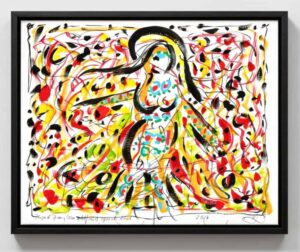
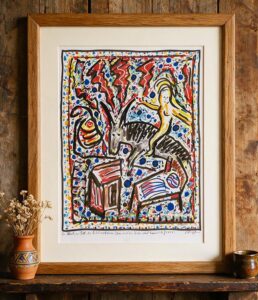
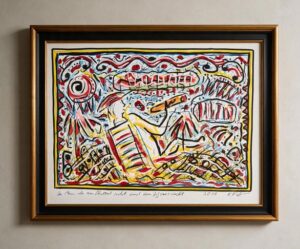
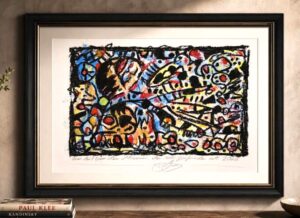
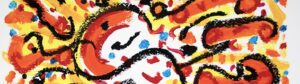
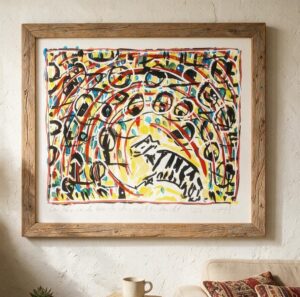
Above:The Man Who Paints Himself Red at Every Change of Season, in Order to Drum, 2026, Acrylic on paper, 85 x 60 cm
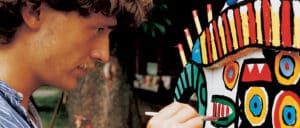
Klaus, at the age of 20, was already creating his distinctive art – a unique signature style.
But life reached out to him with another calling – his sensitive nature made him one of the most influential figures worldwide in the peaceful handling of horses – becoming a bestselling author. As consultant, he is helping, above all, parents to truly understand their own children – to build a genuine connection.
Now Klaus himself is shifting the focus back to his distinctive art – the beginning of everything.
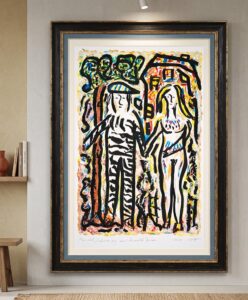
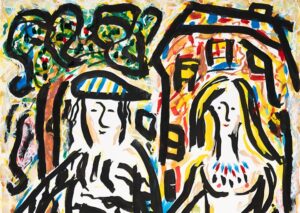
The Wolf-Man the Townspeople Laugh At, Until They Learn He Is Only a Guest, 2026, Acrylic on paper, 100 x 70 cmThe Wolf-Man the Townspeople Laugh At, Until They Learn He Is Only a Guest, 2026, Acrylic on paper, 100 x 70 cmCain Founds the First City in the World, 2026, Acrylic on paper, 70 x 100 cmCain Founds the First City in the World, 2026, Acrylic on paper, 70 x 100 cm
“Mastery does not need an audience in order to be real.”
The Virtuoso Artist Who Performed Before an Audience Only One Single Time, 2026, Acrylic on paper, 100 x 70 cmThe Virtuoso Artist Who Performed Before an Audience Only One Single Time, 2026, Acrylic on paper, 100 x 70 cmCain Is Glad to Be Allowed to Go On Living, but for the First Time He Fears the Future, 2026, Acrylic on paper, 100 x 70 cmCain Is Glad to Be Allowed to Go On Living, but for the First Time He Fears the Future, 2026, Acrylic on paper, 100 x 70 cmMoses Sits Alone on the Bank of the Jordan, but He Is Not Sad, 2026, Acrylic on paper, 100 x 70 cmMoses Sits Alone on the Bank of the Jordan, but He Is Not Sad, 2026, Acrylic on paper, 100 x 70 cm
“Beauty appears when someone gives the world enough attention to notice it.”
The Inuit Who Admires the Delicate Blue of the Snow on This Day with Full Devotion, 2026, Acrylic on paper, 100 x 70 cmThe Inuit Who Admires the Delicate Blue of the Snow on This Day with Full Devotion, 2026, Acrylic on paper, 100 x 70 cmThe Man Who Prays Under a Tree Before Going into the Church, 2026, Acrylic on paper, 60 x 85 cmThe Man Who Prays Under a Tree Before Going into the Church, 2026, Acrylic on paper, 60 x 85 cmThe Height of Creativity, 2026, Acrylic and watercolor on paper, 50 x 65 cmThe Height of Creativity, 2026, Acrylic and watercolor on paper, 50 x 65 cmThe Dancer Who in Exactly 30 Minutes Drives Home to Her Little Daughter, 2026, Acrylic on Paper, 85 x 60 cmThe Dancer Who in Exactly 30 Minutes Drives Home to Her Little Daughter, 2026, Acrylic on Paper, 85 x 60 cm
“Two who face each other — and are made of the same line.”
Day and Night, 2026, Acrylic and watercolor on paper, 50 x 65 cmDay and Night, 2026, Acrylic and watercolor on Paper, 50 x 65 cmA Woman, a Father, Two Brothers and an Uncle Who Are Flying, 2026, Acrylic on paper, 85 x 60 cmA Woman, a Father, Two Brothers and an Uncle Who Are Flying, 2026, Acrylic on paper, 85 x 60 cmUntitled, 2026, Acrylic on paper, 100 x 70 cmUntitled, 2026, Acrylic on paper, 100 x 70 cm
“It does not only seek its source in the world”
The Zebra in the Desert That Does Not Die of Thirst, 2026, Acrylic on paper, 40 x 50 cmThe Zebra in the Desert That Does Not Die of Thirst, 2026, Acrylic on paper, 40 x 50 cm
“Illusion or reality?”
The Figure No One Is Able to Interpret, 2026, Acrylic and watercolor on paper, 64 x 50 cmThe Figure No One Is Able to Interpret, 2026, Acrylic and watercolor on paper, 64 x 50 cmParadise, 2026, Acrylic on paper, 70 x 100 cmParadise, 2026, Acrylic on paper, 70 x 100 cmThe Man Who Does Not Like Carnival, and Dresses Up Once a Year, 2026, Acrylic and watercolor on paper, 65 x 50 cmThe Man Who Does Not Like Carnival, and Dresses Up Once a Year, 2026, Acrylic and watercolor on paper, 65 x 50 cm
“Symbol of origin – calm and storm.”
The First Woman, 2026, Acrylic and watercolor on paper, 65 x 50 cmThe First Woman, 2026, Acrylic and watercolor on paper, 65 x 50 cm
„The last one is not the lost one. He is the one who still knows.”
The Last Bowhunter, 2026, Acrylic on paper, 85 x 60 cmThe Last Bowhunter, 2026, Acrylic on paper, 85 x 60 cm
“As a young boy, I had to survive alone in the forest. Communicating peacefully with an exploding horse or painting a picture like I do has a lot to do with that.” KFH
“The culmination point – the moment before the transformation.”
The Man Who Became a Bird, Shortly Before His Transformation, 2026, Acrylic and watercolor on paper, 65 x 50 cmThe Man Who Became a Bird, Shortly Before His Transformation, 2026, Acrylic and watercolor on paper, 65 x 50 cm
“What happens to a person when their previous reality suddenly no longer holds true?”
The Conversion of Paul, 2026, Acrylic and watercolor on paper, 85 x 60 cmThe Conversion of Paul, 2026, Acrylic and watercolor on paper, 85 x 60 cmThe Human Being Who Jumps from a Cliff into the Water and Experiences the Flight as if in Slow Motion, 2026, Acrylic and watercolor on paper, 65 x 50 cmThe Human Being Who Jumps from a Cliff into the Water and Experiences the Flight as if in Slow Motion, 2026, Acrylic and watercolor on paper, 65 x 50 cm
“The ancestor does not reject the future. He maintains a relationship with the world that the future could easily forget:”
I dreamed I was an ancestor who refused the emerging Western world, 2026, Acrylic and watercolor on paper, 85 x 60 cmI dreamed I was an ancestor who refused the emerging Western world, 2026, Acrylic and watercolor on paper, 85 x 60 cm
“A body covered in open places—standing calm. That is trust in oneself: no armor anywhere.”
Trust in Oneself, 2026, Acrylic on paper, 60 x 40 cmTrust in Oneself, 2026, Acrylic on paper, 60 x 40 cm
“For me, a picture is finished when it can no longer be destroyed, when it no longer wants to go anywhere. Just a single point after that would irrevocably kill the picture.” KFH
“The origin that surrounds us, with which we adorn ourselves.”
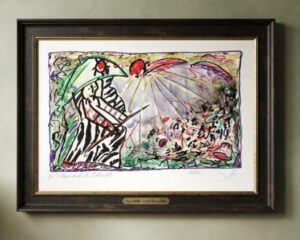
A Room with a Picture in Which Two People and a Zebra Can Be Seen, 2026, Acrylic and watercolor on paper, 70 x 100 cmA Room with a Picture in Which Two People and a Zebra Can Be Seen, 2026, Acrylic and watercolor on paper, 70 x 100 cm
“No heroic Atlases amidst enormous weights.”
The Columns That Carry the Sky, 2026, Acrylic and watercolor on paper, 64 x 50 cmThe Columns That Carry the Sky, 2026, Acrylic and watercolor on paper, 64 x 50 cm
“The belief in holistic perception and holistic self-expression is the basis for every painting and essentially for everything in my life.” KFH
“She does not abandon the wildness. She transforms her relationship to it:”
A Body-Painted Woman, a Child, and a Piebald Horse, 2026, Acrylic and watercolor on paper, 65 x 50 cmA Body-Painted Woman, a Child, and a Piebald Horse, 2026, Acrylic and watercolor on paper, 65 x 50 cm
“Freedom or error in the face of possession.”
The Man Who Owns a House but Prefers to Live in a Cave, 2026, Acrylic on paper, 100 x 70 cmThe Man Who Owns a House but Prefers to Live in a Cave, 2026, Acrylic on paper, 100 x 70 cm
“What truly changes her does not cover her. It reveals her:”
A New Garment That Actually Changes You in a Positive Way, 2026, Acrylic and watercolor on paper, 85 x 60 cmA New Garment That Actually Changes You in a Positive Way, 2026, Acrylic and watercolor on paper, 85 x 60 cm
“More than mere acceptance?”
The Moon That Has No Problem Not Being the Sun, 2026, Acrylic and watercolor on paper, 50 x 65 cm
“Monumentality arises not from size or pathos, but from frontality, calmness and radical simplification”:
A Man in a Zebra Suit and a Body-Painted Woman, 2026, Acrylic and watercolor on paper, 110 x 75 cm
Detail
“The ordinary becomes strange without ceasing to be ordinary.”
A Truck with Three Coloured Chairs and Four White Chairs in Front of a Café in Paris, 2026, Acrylic on paper, 70 x 100 cm
Detail
“The nameless one in unnameable reality.”
The Rider Who Forgot His Name, 2026, Acrylic on paper, 40 x 60 cmThe Rider Who Forgot His Name, 2026, Acrylic on paper, 40 x 60 cm
“Some big questions come surprisingly easily”:
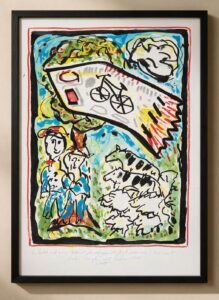
A Rocket with a Bicycle Painted on It Flies over a Meadow with Children, Sheep and Cows, 2026, Acrylic and watercolor on paper, 100 x 70 cm
Detail
KFH 2026
“The power of reality in dreams.”
A Sleeping Woman Who Dreams of Being Body-Painted, 2026, Acrylic on paper, 50 x 65 cmA Sleeping Woman Who Dreams of Being Body-Painted, 2026, Acrylic on paper, 50 x 65 cm
“Perhaps the real singing only begins where the memorized lyrics end:”
The Singer Who Forgot His Lyrics 2026, Acrylic on paper, 40 x 60 cm
Detail
“I don’t paint things or beings. I paint states, sensations, transitions.”KFH
“The egg is life’s smallest promise — and this whole picture protects this promise:”
The Bird and the Nest, 2026, Acrylic and watercolor on paper, 65 x 50 cm
Detail
“This image does not depict a wedding between two people. It depicts the architecture of a shared life:”
The Wedding, 2026, Acrylic and watercolor on paper, 85 x 60 cm
Detail
“The gate opens not because the mystery has been solved, but because it remains.”
The Gate of the World, 2026, Acrylic and watercolor on paper, 85 x 60 cmThe Gate of the World, 2026, Acrylic and watercolor on paper, 85 x 60 cm
“What remains after the mask?”
People Meet to Burn Their Masks, 2026, Acrylic and watercolor on paper, 85 x 60 cmPeople Meet to Burn Their Masks, 2026, Acrylic and Watercolor on Paper, 85 x 60 cm
“Not a film appears, but a living counter-image: woman, wildness, and the public sphere:”
A Body-Painted Woman with a Zebra in Front of a Cinema, 2026, Acrylic and watercolor on paper, 85 x 60 cmA Body-Painted Woman with a Zebra in Front of a Cinema, 2026, Acrylic and watercolor on paper, 85 x 60 cm
“The woman doesn’t dance before the world. She dances her way into the world:”
Dancing Woman, Body Painted, in a Green Dress, 2026, Acrylic on paper, 50 x 65 cm
“The tree survives, but it does not become simple.”
The Tree That Was to Be Felled but Was Spared 2026, Acrylic on paper, 85 x 60 cm
Detail
“The home itself does not appear in the picture. Precisely for that reason, the entire picture is filled with it”:
The Long Way Home, 2026, Acrylic and watercolor on paper, 60 x 85 cm
Detail
The Moses Triptych 3 paintings:
Moses Triptych framed (3)
The Moses Triptych
The series does not show Moses as a monument or miracle-worker. It turns instead toward the human being beside the mythology — a person who can act, be misunderstood, become legendary, and finally let the story continue without him.
Perhaps this is the deepest movement of the triptych: Moses does not end by losing the Promised Land. He ends by no longer needing to possess what he has helped make possible.
The foundational figures appearing within these visual cycles—such as Cain or Moses—are treated strictly as primal cultural heritage, completely extricated from theological, clerical, or institutional dogma. The foundational figures become ways of looking at questions that remain recognisable today: guilt, fear, power, responsibility, exclusion, survival, leadership, loss, belonging, acceptance and the creation of a future. The paintings use culturally formative figures to open human situations that have long outgrown the boundaries of their original stories.
Moses Builds Himself a War-Bow, but Tells No One, 2026, Acrylic on paper, 100 x 70 cmMoses Builds Himself a War-Bow, but Tells No One, 2026, Acrylic on paper, 100 x 70 cmMoses Explains Before a Large Theatre Audience That It Was Not He Who Parted the Sea, 2026, Acrylic on paper, 100 x 70 cmMoses Explains Before a Large Theatre Audience That It Was Not He Who Parted the Sea, 2026, Acrylic on paper, 100 x 70 cmMoses Sits Alone on the Bank of the Jordan, but He Is Not Sad, 2026, Acrylic on paper, 100 x 70 cmMoses Sits Alone on the Bank of the Jordan, but He Is Not Sad, 2026, Acrylic on paper, 100 x 70 cm
The Humanity Trilogy 3 Paintings:
Menschlichkeit wall all pain orig
The Humanity Trilogy
Three paintings. Three fundamental human developments. The trilogy follows a simple movement: to name the world, to change the world, to share the world. The first capacity allows human beings to create meaning through signs. The second allows them to intervene physically in their surroundings. The third asks what happens once several human beings must live together.
So the trilogy moves from symbolic intelligence, through practical intelligence, to ethical intelligence. Language gives us a shared reality. Skill gives us the power to intervene in it. Justice asks what we do with that power once others are present. Perhaps humanity does not begin with what we possess, but with these three abilities: to give meaning, to act, and to recognise that we are not alone.
The A-Bull — The Emergence of Language, 2026, Acrylic on paper, 60 x 60 cmThe A-Bull — The Emergence of Language, 2026, Acrylic on paper, 60 x 60 cmThe Five Mountains — The Development of Dexterity, 2026, Acrylic on paper, 60 x 60 cmThe Five Mountains — The Development of Dexterity, 2026, Acrylic on paper, 60 x 60 cmThe Seven Dwarfs — The Development of Justice, 2026, Acrylic on paper, 60 x 60 cmThe Seven Dwarfs — The Development of Justice, 2026, Acrylic on paper, 60 x 60 cm
The Cain-sequence 5 paintings:
W0114-8 Leben kain framed
THE LIFE OF CAIN Cain is not reduced to the murderer of the biblical story. He becomes a human being who must continue after something irreversible has happened. He survives. He becomes afraid. He builds. He organises. He creates a world in which life can continue.
Perhaps this is the deeper movement of the series: Cain does not simply leave paradise. He begins constructing the world that comes after it. And perhaps that is why the story still belongs to us. Because after loss, fear and rupture, human beings continue to do what Cain does here: we build
The foundational figures appearing within these visual cycles—such as Cain or Moses—are treated strictly as primal cultural heritage, completely extricated from theological, clerical, or institutional dogma. The foundational figures become ways of looking at questions that remain recognisable today: guilt, fear, power, responsibility, exclusion, survival, leadership, loss, belonging, acceptance and the creation of a future. The paintings use culturally formative figures to open human situations that have long outgrown the boundaries of their original stories.
Cain Sacrifices the Roots of His Walled Garden, but Not the Fruit, 2026, Acrylic on paper, 70 x 100 cmCain Sacrifices the Roots of His Walled Garden, but Not the Fruit, 2026, Acrylic on paper, 70 x 100 cmThe Fight of Cain, 2026, Acrylic on paper, 70 x 100 cmThe Fight of Cain, 2026, Acrylic on paper, 70 x 100 cmCain Is Glad to Be Allowed to Go On Living, but for the First Time He Fears the Future, 2026, Acrylic on paper, 100 x 70 cmCain Is Glad to Be Allowed to Go On Living, but for the First Time He Fears the Future, 2026, Acrylic on paper, 100 x 70 cmCain Builds Himself a House with a Marble Bathroom — There Is No Room for Abel and Seth, 2026, Acrylic on paper, 70 x 100 cmCain Builds Himself a House with a Marble Bathroom — There Is No Room for Abel and Seth, 2026, Acrylic on paper, 70 x 100 cmCain Founds the First City in the World, 2026, Acrylic on paper, 70 x 100 cmCain Founds the First City in the World, 2026, Acrylic on paper, 70 x 100 cm
The Zebra cycle 10 paintings:
Zebra wall hanging vertical no frame no title
The Zebra Sequence — 10 Paintings, 2026
The ten paintings of the Zebra Sequence arrived one by one. The painter did not choose the theme of each painting — the sequence itself demanded it. KFH himself has said that during these days he was not “free” to paint anything else.
This isn’t a series about zebras. This is a story about civilization. What begins with a woman wrapped in a zebra fur travels — step by step — through crowns and battles, circuses and courtesans, back to a child, a young hunter, and finally a meadow. Each painting is a work in its own right, and each face keeps its dignity. But walked through in sequence, the ten pictures become one story: what humankind has done with the wild — and what remains possible.
Zebra Station I “This woman is not wearing a costume. She embodies the tension between wildness and the modern world:”
A Modern Woman, Partly Wrapped in a Zebra Fur, 2026, Acrylic on paper, 50 x 65 cmA Modern Woman, Partly Wrapped in a Zebra Fur, 2026, Acrylic on paper, 50 x 65 cm
Zebra Station II “She does not stand naked before the world. She stands accompanied by her untamed nature:”
Woman with Zebra, 2026, Acrylic on paper, 85 x 60 cmWoman with Zebra, 2026, Acrylic on paper, 85 x 60 cm
Zebra Station III “Origin acknowledged, overlooked, transformed?”
Manager in Front of a Zebra Skin, 2026, Acrylic on paper, 85 x 60 cmManager in Front of a Zebra Skin, 2026, Acrylic on paper, 85 x 60 cm
Zebra Station IV “Timeless innocence without any distinctions?”
Child with Zebra, 2026, Acrylic on Paper, 60 x 85 cm
Detail
Zebra Station V “The world has already surrounded him with symbols, but his face still belongs to himself:”
Very Young Primeval Hunter with a Zebra Skin, One Day Before His First Hunt — Around 1900 on the Banks of the Congo, 2026, Acrylic on paper, 85 x 60 cmVery Young Primeval Hunter with a Zebra Skin, One Day Before His First Hunt — Around 1900 on the Banks of the Congo, 2026, Acrylic on paper, 85 x 60 cm
Zebra Station VI “The king sits on the throne. But the face still bears witness to the human spirit:”
God-King vs. Human?, 2026, Acrylic on paper, 85 x 60 cmGod-King vs. Human?, 2026, Acrylic on paper, 85 x 60 cm
Zebra Station VII “A profound and questioning manifestation of Eros, nature, and seriousness:”
The Courtesan with the White Flower, 2026, Acrylic and watercolor on paper, 60 x 85 cm
Detail
“It’s important to me that my paintings point in clear directions, but not to fixed mental locations. This leaves plenty of room for the viewer to position themselves.” KFH
Zebra Station VIII “When wildness becomes a uniform, the battle begins:”
The Commander and the Battle, 2026, Acrylic and watercolor on paper, 60 x 85 cm
Detail
Zebra Station IX “When the wild becomes parody in the abundance of the reduced.”
The ‘Strongest Man in the World’ in a Small Circus in the South of France in 1932, 2026, Acrylic and watercolor on paper, 85 x 60 cm
Detail
Zebra Station X “In the open field, where sheep, lions, monsters, and children all belong to the same world:”
Riding a Huge Zebra Over a Meadow with Sheep, Lions and Monsters, 2026, Acrylic and watercolor on paper, 85 x 60 cmRiding a Huge Zebra Over a Meadow with Sheep, Lions and Monsters, 2026, Acrylic and watercolor on paper, 85 x 60 cm
The series has drawn a complete anthropology of the wild— and it ends not with a moral, but with a promise: that beneath all roles, counts, prices, and costumes, the original remains undamaged and can return as soon as it is allowed to. The final image does not claim that history did not happen—it claims that it does not have the last word. Nine sheets of truth, one sheet of promise.
The Homo-sapiens–Sequence 9 paintings
Homo sapiens wall order wo frame - wo titles
HOMO SAPIENS
Nine paintings. Three movements. One recurring question: What does it mean to become human? The series begins with arriving. The human being appears not as something complete, but as something still forming: entering the world, encountering opposites, creating a place in which to live. Day and night, inside and outside, self and world begin to separate — and with that separation, consciousness begins.
The human being starts to organise what has been encountered. We create systems, comparisons, hierarchies and forms of power. Order helps us live together, but every order also begins to define what is permitted, who is ahead, who follows, and who is able to impose their reality upon another.
What began as orientation can become limitation. The structures that once gave security are no longer enough. The human being resists, changes, transforms. Passion gives way not simply to less passion, but to a larger life. Creativity reaches a point at which control itself may have to be surrendered.
The movement of the series is therefore not linear progress. Perhaps this is what the series finally asks: Is being human a condition — or the continuous attempt to become something we have not yet been?
“Perhaps being human begins with the tension between belonging and being alone.”
The Human Being, 2026, Acrylic and watercolor on paper, 50 x 65 cmThe Human Being, 2026, Acrylic and watercolor on paper, 50 x 65 cm
“Two who face each other — and are made of the same line.”
Day and Night, 2026, Acrylic and watercolor on paper, 50 x 65 cmDay and Night, 2026, Acrylic and watercolor on Paper, 50 x 65 cm
“That which can be different in the chaos.”
The House, 2026, Acrylic and watercolor on paper, 50 x 65 cmThe House, 2026, Acrylic and watercolor on paper, 50 x 65 cm
“Where and how can each order be found?”
Order, 2026, Watercolor and Acrylic on Paper, 65 x 50 cmOrder, 2026, Acrylic and watercolor on paper, 65 x 50 cm
“Is there a goal at the end?”
The Race, 2026, Watercolor and Acrylic on Paper, 50 x 65 cmThe Race, 2026, Acrylic and watercolor on paper, 50 x 65 cmThe Powerful One, 2026, Acrylic and watercolor on paper, 65 x 50 cmThe Powerful One, 2026, Acrylic and watercolor on paper, 65 x 50 cmRising Up, 2026, Acrylic and watercolor on paper, 50 x 65 cmRising Up, 2026, Acrylic and watercolor on paper, 50 x 65 cm
“What once filled everything must now make room for something larger.”
When Passion Gives Way to Life, 2026, Acrylic and watercolor on paper, 50 x 65 cmWhen Passion Gives Way to Life, 2026, Acrylic and watercolor on paper, 50 x 65 cmThe Height of Creativity, 2026, Acrylic and watercolor on paper, 50 x 65 cmThe Height of Creativity, 2026, Acrylic and watercolor on paper, 50 x 65 cm
Further selectedKFH-paintings from 2026
“Klaus is not painting a bullfight, but rather the moment when a closed system is confronted with something that has no designated place within it”:
A Bullfight with a Zebra, a Rider, a Torero, and a Bull, 2026, Acrylic and watercolor on paper, 70 x 100 cm
Detail
“For me, painting a picture means making a thousand decisions with the certainty of arriving, completing, and finishing.” KFH
“He does not reach out his hand. He simply stands there. And she rises.”
The Healer, 2026, Acrylic and watercolor on paper, 100 x 70 cmThe Healer, 2026, Acrylic and watercolor on paper, 100 x 70 cm
“The surroundings explode, the figures remain calm.”
A Shorter, Older Man Boxes a Younger, Taller Woman for Prize Money, 2026, Acrylic on paper, 100 x 70 cmA Shorter, Older Man Boxes a Younger, Taller Woman for Prize Money, 2026, Acrylic on paper, 100 x 70 cm
She doesn’t sleep to escape the world. She sleeps so that another world can touch her:”
A Sleeping Woman Who Dreams of Being Body-Painted II, 2026, Acrylic on paper, 50 x 65 cm
“She does not resist time. She remains alive within it.”
A Woman Who Is Not Afraid of Growing Older, 2026, Acrylic on paper, 65 x 50 cmA Woman Who Is Not Afraid of Growing Older, 2026, Acrylic on paper, 65 x 50 cm
“Here, courage isn’t shown. Here, courage is born.”
The Fear That Gives Birth to Courage, 2026, Acrylic and watercolor on paper, 65 x 50 cmThe Fear That Gives Birth to Courage, 2026, Acrylic and watercolor on paper, 65 x 50 cm
“Klaus doesn’t paint the first word – he paints the moment when feeling becomes a sign”:
The First Word, 2026, Acrylic and watercolor on paper, 65 x 50 cm
“When the small things matter, when the unspoken leads to the decision.”
David Drives the Lion Away from the Sheep, 2026, Acrylic on paper, 65 x 50 cm
“This image shows creation not as an event of power, but as the first innocent coexistence of body, relationship, and life”:
The Creation | 2026 | Acrylic on Paper, 65 x 50 cm
“He who senses everything needs not prove anything:”
A Lion Scenting Its Prey | 2026 | Watercolor and Soft Pastel on Paper, 60 x 85 cmA Lion Scenting Its Prey | 2026 | Watercolor and Soft Pastel on Paper, 60 x 85 cm
KFH 2026 / Denmark
“The drummer doesn’t play music. He reminds people of the first rhythm:”
The Drummer | 2026 | Watercolor and Acrylic on Paper, 65 x 50 cm
Detail
Woodcut – 1977, KFH Archive:
KFH, 2026, Denmark
“With shockingly few resources, a complete state of humanity, audience, movement, and joy is created”:
The Juggler Who Has Not Dropped a Ball in His Performances for 29 Days | 2026 | Acrylic and Watercolor on Paper, 65 x 50 cm
Detail
“Gentle is not the image. Gentle is the way the force touches the woman:”
Gently Body-Painted Woman | 2026 | Acrylic on Paper, 50 x 65 cm
“She does not bloom despite being eaten. She blooms because that is her life—complete, for now:”
A Small Flower in a Cattle Meadow, Untroubled That It Will Soon Be Eaten, 2026, Acrylic on Paper, 50 x 65 cm
“Those who fear fire remain cold. Those who shape it begin to shine:”
Overcoming the Red | 2026 | Watercolor and Acrylic on Paper, 65 x 50 cm
“Reunion is not continuation. It is a new first encounter with someone you thought you knew:”
The Reunion | 2026 | Oil Pastel and Acrylic on Paper, 42 x 30 cm
“Out of chaos, new life emerges – vulnerable, powerful, and full of possibilities:”
The Birth | 2026 | Oil pastel on Paper, 42 x 30 cm
“Before a person writes, they discover that a line can speak:”
A Child Learning to Write | 2026 | Oil pastel and Acrylic on Paper, 30 x 42 cm
“Perhaps grace begins where, even between adversaries, enmity is no longer necessary for a moment”:
1810 – A Japanese Warrior Before a Duel to the Death. In the Moment of Dying He Will Thank His Opponent for His Mercy. | 2026 | Acrylic and Watercolor on Paper, 85 x 60 cm
Detail
“The moment when a person becomes greater than their fear:”
When Fear Recedes | 2026 | Oil pastel and Acrylic on Paper, 30 x 42 cm
„My paintings are created in layers. Once one is finished, the next one follows. But then the first stroke destroys everything again. In this way, each painting dies several times in the process until it finally says: This is how I want to be.” KFH
“What slips through the hand may still leave the deepest trace:”
A Handful of Water | 2026 | Oil Pastel on Paper, 30 x 42 cm
“A good decision doesn’t begin where all doubts disappear. It begins where you take your place within yourself:”
A Good Decision | 2026 | Acrylic on Paper, 50 x 40 cm
“I never throw away an unfinished piece of paper or start a topic again. It’s like life itself for me. There’s a promise in every moment – just like in a sheet of paper.” KFH
“Here, the mother becomes the landscape of the beginning:”
Mother with Children in France in the Year 300 AD | 2026 | Acrylic and Watercolor on Paper, 60 x 85 cm
“Caring is not a gesture. It is a decision that never ends:”
The Caring Father, 2026, Oil pastel and acrylic on paper, 34 x 48 cm
“First, the title of a painting comes to mind. Then I already have a fairly precise form in my head. Then it’s a matter of grounding myself, taking a breath, focusing, in order to formulate what I’ve imagined. The title is like the lighthouse – that’s exactly where I want to go.” KFH
“It was not finished when it was tidy. It was finished when life flowed through it.”
The New Home | 2026 | Acrylic on Paper, 40 x 50 cm
“It is the moment when the archetypal breaks through the furniture of everyday life:”
A Wardrobe, a Bed, a Picture with a Woman and a Bull, and Bolts of Fire II | 2026 | Acrylic and Watercolor, 65 x 50 cm
“The man is not sitting outside the movement. He remains calm within it.”
The Man Who Sits on the Beach and Smokes a Cigar | 2026 | Acrylic and Watercolor on Paper, 50 x 65 cm
“The image is immediately understandable – and becomes more enigmatic the longer you look at it”:
The Man Who for a Long Time Did Not Want to Wear Sunglasses | 2026 | Acrylic and Watercolor on Paper, 65 x 50 cm
“Stillness becomes an expression of strength:”
A Sitting Man, Very Content | 2026 | Oil Pastel and Acrylic on Paper, 34 x 48 cm
“He does not only search for a father; he searches for origin, direction and an inner measure:”
The Boy Who Seeks His Father | 2026 | Acrylic on Canvas, 120 x 80 cm
The newest KFH paintings
The A-Bull — The Emergence of Language, 2026, Acrylic on paper, 60 x 60 cmThe A-Bull — The Emergence of Language, 2026, Acrylic on paper, 60 x 60 cmThe Five Mountains — The Development of Dexterity, 2026, Acrylic on paper, 60 x 60 cmThe Five Mountains — The Development of Dexterity, 2026, Acrylic on paper, 60 x 60 cmThe Seven Dwarfs — The Development of Justice, 2026, Acrylic on paper, 60 x 60 cmThe Seven Dwarfs — The Development of Justice, 2026, Acrylic on paper, 60 x 60 cmA Woman, a Father, Two Brothers and an Uncle Who Are Flying, 2026, Acrylic on paper, 85 x 60 cmA Woman, a Father, Two Brothers and an Uncle Who Are Flying, 2026, Acrylic on paper, 85 x 60 cmMoses Builds Himself a War-Bow, but Tells No One, 2026, Acrylic on paper, 100 x 70 cmMoses Builds Himself a War-Bow, but Tells No One, 2026, Acrylic on paper, 100 x 70 cmMoses Explains Before a Large Theatre Audience That It Was Not He Who Parted the Sea, 2026, Acrylic on paper, 100 x 70 cmMoses Explains Before a Large Theatre Audience That It Was Not He Who Parted the Sea, 2026, Acrylic on paper, 100 x 70 cmMoses Sits Alone on the Bank of the Jordan, but He Is Not Sad, 2026, Acrylic on paper, 100 x 70 cmMoses Sits Alone on the Bank of the Jordan, but He Is Not Sad, 2026, Acrylic on paper, 100 x 70 cmThe Man Who Prays Under a Tree Before Going into the Church, 2026, Acrylic on paper, 60 x 85 cmThe Man Who Prays Under a Tree Before Going into the Church, 2026, Acrylic on paper, 60 x 85 cmThe Dancer Who in Exactly 30 Minutes Drives Home to Her Little Daughter, 2026, Acrylic on paper, 85 x 60 cmThe Dancer Who in Exactly 30 Minutes Drives Home to Her Little Daughter, 2026, Acrylic on paper, 85 x 60 cmParadise, 2026, Acrylic on paper, 70 x 100 cmParadise, 2026, Acrylic on paper, 70 x 100 cmThe Human Being Who Jumps from a Cliff into the Water and Experiences the Flight as if in Slow Motion, 2026, Acrylic and watercolor on paper, 65 x 50 cmThe Human Being Who Jumps from a Cliff into the Water and Experiences the Flight as if in Slow Motion, 2026, Acrylic and watercolor on paper, 65 x 50 cmThe Boy who Dared to Wear His Hair the Way He Saw It in His Dream, 2026, Acrylic and watercolor on paper, 65 x 50 cmThe Boy who Dared to Wear His Hair the Way He Saw It in His Dream, 2026, Acrylic and watercolor on paper, 65 x 50 cmUntitled, 2026, Acrylic on paper, 100 x 70 cmUntitled, 2026, Acrylic on paper, 100 x 70 cm
An essay on Klaus and his art:
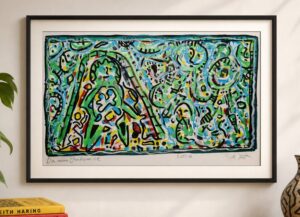
A Woman Who Is Not Afraid of Growing Older | 2026 | Acrylic on Paper, 65 x 50 cm
The Line That WasNever Corrected
Klaus Ferdinand Hempfling and the Return to the Origin
By Agnes Islander
There are moments in the art world that surprise us because they don’t look like art world moments at all. No opening night buzz, no curatorial program, no carefully orchestrated press conference. Here is a person in Denmark painting—and putting something on paper that, upon first seeing it, we can’t immediately categorize.
That is the strange and unsettling quality of Klaus Ferdinand Hempfling’s new works. You stand before them and know immediately: something is right here. But it takes a moment to grasp what.
Those who know the name Klaus Ferdinand Hempfling probably don’t know him as a painter. They know him as the man who, in the 1990s, shook the equestrian world with his book *Dancing with Horses*—as someone who demonstrated that completely non-violent interaction with horses is possible, without a system, without a method, solely through presence and inner clarity. He is known as an international bestselling author, a consultant to families and executives on six continents, and one of the most followed personalities on German-language social media.
Dancing Women | 2026 | Oil pastel on Paper, 42 x 30 cm
What he is not usually called first: an artist.
Yet he was first and foremost an artist, and has remained so without interruption. At eighteen, Hempfling exhibited his first works. Just a few years later, he was teaching at the Dortmund University of Art and Design. He brought theatrical works to the stage. The decades that followed did not take him away from art—they simply carried it into other realms. The horses were art with a different material. The family and life coaching was art with a different material. And now Klaus Ferdinand Hempfling has returned to his studio in Denmark, partly to present his emerging work anew. He has returned to line, color, and paper. Home.
The Works
What one sees when viewing these images for the first time is an explosive, sometimes unsettling, always vibrant energy. The black line—placed in oil pastel or acrylic—is the structuring skeleton. She is sovereign. She doesn’t hesitate. She possesses the quality of something created from an inner impulse, not from deliberation. And then the background: color that doesn’t illustrate but pulsates. Yellow that burns. Red that is distributed like heartbeats. Blue that cools and sustains.
The Boy Who Seeks His Father | 2026 | Acrylic on Canvas, 120 x 80cm
The titles: “The Boy Who Searches for His Father”—a work that, with its intensity and compositional boldness, stands out from the rest of the portfolio and yet speaks to every other piece. Or “Sleeping Woman,” “A Handful of Water,” “When Fear Subsides,” “A Person Who Is Not Afraid of Death,” “A Woman Carrying a Stranger’s Child.” They are not descriptions of what one sees. They are doors. You stand before the painting, read the title, and feel something begin to stir within you that would not have been set in motion without the combination of image and title.
The Method
The creative process behind these works is so unusual that it must be described. Each painting begins with the title. Not as a retrospective naming, not as a thematic guideline to be illustrated—but as an arrival. The title emerges. Then the hand moves. What follows often lasts only moments. No preliminary sketch. No drafting phase. No corrections—ever. Not because Hempfling rejects correction, but because he understands the principle of non-correction as the highest declaration a person can make to a moment: I was fully present. What emerged, emerged fully.
This attitude—the promise to the paper that is the same promise he has kept for decades before the world’s most dangerous horses—is not impulsiveness. It is the maturity of someone who has learned that the first, uncensored, complete expression is the only honest response to a moment.
The speed of these works is not their weakness. It is their proof.
The Commander and the Battle | 2026 | Watercolor and Acrylic on Paper, 60 x 85 cm
Art Historical Context
Those who look for connections will find them—and yet find them inadequate.
The paintings resonate most strongly with the Cobra movement of the late 1940s and early 1950s: Karel Appel, Asger Jorn—the Dane with whom Hempfling shares a curious geographical and intellectual resonance—and Pierre Alechinsky. The same expressive immediacy, the same archaic pictorial symbols, the same color as pure emotion. In the dense sign systems of individual works, qualities of Jean Dubuffet’s Hourloupe period emerge; in the lyrical openness of Paul Klee’s early works, echoes; in the calligraphic energy of certain lines, an affinity with the late Cy Twombly.
But every comparison touches on one aspect and misses the whole.
What distinguishes these paintings from the aforementioned models is their origin. Appel, Jorn, and Alechinsky came from the European avant-garde, from manifestos and movements and a conscious break with academic traditions. Hempfling came from the forest. From decades of absolute presence before horses and humans. From a mythological and anthropological deep dive into the traditions of ancient cultures. This gives these images a quality that in English would be described as unmediated—direct, without the filter of art history, without the self-awareness of avant-gardism.
The term Mythopoetic Expressionism was coined for these works—not to confine them to a category, but because no existing term fully captures them. It is the first and so far only example of this designation.
What these images do
There is a distinction in art appreciation that is rarely discussed as precisely as it deserves.
A window image shows you the world. A flower, a sunset, a dancing figure—the subject exists outside the artist, and the image grants you access to it. You look at it and recognize something external.
A door image shows you yourself. It doesn’t open outward but inward—into something you already carry, already know, already feel, without having had the form to look at it. It gives visibility to the invisible within.
Klaus Ferdinand Hempfling’s paintings are all, without exception, doors.
A Very Peaceable Person | 2026 | Watercolor and Acrylic on Paper, 60 x 85 cm
“When Fear Recedes”—one expects stillness, tenderness, resignation. What the painting shows is the most explosive yellow in his entire portfolio, an energy that is almost impossible to contain. The receding of fear doesn’t leave emptiness—it leaves life in its most complete form. Anyone who feels this without being able to articulate it beforehand has truly seen the painting.
“The Boy Who Searches for His Father”—a work created in a single night, on a canvas that the artist then contemplated while lying exhausted on the floor, realizing: he could make a correction to the corners. He knew how. He left it. These two incoherent corners represent the uncertainty of the search—according to Hempfling himself. The painting was not allowed to be more perfect than its subject.
The Return
A Child Learning to Write | 2026 | Oil pastel and Acrylic on Paper, 34 x 48 cm
There is a temptation to interpret these works as late work—as a creative awakening that, after decades of interruption, returns to his original craft. This interpretation is wrong.
Klaus Ferdinand Hempfling never stopped being an artist. He put his art aside as long as life demanded something else. What is emerging now is not the rediscovery of a forgotten skill. It is the fully ripened fruit of a life that has always drawn from the same source.
The paintings embody this. Not as a message, not as a program—but as undeniable evidence of something that has passed through a person who has spent decades learning to be completely present. In every line.
Klaus Ferdinand Hempfling is presenting these works to an art audience for the first time.
Art was always there. Klaus Ferdinand Hempfling is not “also an artist.” Art was always there. It is not a later addition to his work with horses and people, but one of its deepest sources. Long before his various fields of activity took their current form, there was drawing, design, and an artistic way of perceiving the world. Line, movement, tension, rhythm, relationship—much of what would later characterize his work with horses and people is already present in his artistic vision.
Thus, painting is not separate from his other work. It leads back to its origin. Before working with horses, teaching, and working with people found their own form, there was already line, movement, rhythm, and the immediate grasp of an inner state. … What later became visible in different areas stems from the same source.
The zebra is one of the most powerful symbols in Klaus Ferdinand Hempfling’s art because it unites wildness and form. Its body is already a living drawing: black and white, rhythm and camouflage, visibility and mystery. It is close to the horse, yet it refuses the human world in a completely different way. The horse can become a bridge. The zebra remains a threshold. In Hempfling’s paintings, the zebra is never merely an exotic animal. It asks how the human being relates to wildness: by wearing it, fearing it, using it, admiring it — or finally learning to move with it.
Child with Zebra, 2026, Acrylic on paper, 60 x 85 cm
For Klaus, the zebra is not the next step after the horse. It is the boundary at which even mastery must stop. The horse can enter a profound relationship with the human being. The zebra remains fundamentally wild and untouchable. This is not a failure of skill, but a recognition of truth. Not everything that resembles the horse belongs to the human field of relationship. In the paintings, the zebra may appear, carry, protect, challenge or guide — but it is never possessed. Its dignity lies in remaining free.
The Zebra in the Desert That Does Not Die of Thirst, 2026, Acrylic on paper, 40 x 50 cm
So – Klaus transforms the zebra into the ultimate symbol of the unbendable spirit. To invite a zebra into a painting is to declare an absolute veto against conformity. It is a visual guarantee that the raw truth of nature will always break through the glass ceilings of corporate and social control.
The painted women in Hempfling’s art are not decorated bodies. They are bodies turned into language. The markings are not fashion, costume or ornament in the superficial sense. They suggest belonging, memory, ritual, nature, experience and inner transformation. The body becomes a surface where life has written signs. In many of these paintings, the figure is not exposed but revealed. The painted body does not ask to be consumed by the viewer. It stands as a living place where instinct, dignity, vulnerability and power meet.
Body-Painted Women in Klaus Ferdinand Hempfling’s Art:
Klaus’ painted women are not decorated bodies. The body becomes language. The markings are not fashion, ornament or costume in the superficial sense. They suggest belonging, memory, ritual, nature, experience and inner transformation.
The painted body is not exposed. It is revealed. The woman does not become an object for the viewer. She becomes a living place where instinct, dignity, vulnerability and power meet.
The painting on the body does not cover her. It makes visible that the body itself can be a sacred place. The body here is not merely anatomy. It is posture, memory, courage, sensuality, protection and transformation.
A painted woman in Klaus’ work often carries her inner world outward. She is not disguised. She is revealed. Her sensuality is not consumption. It is presence. The true “garment” is not fabric. It is dignity, self-possession and the courage to appear without false covering.
The feminine in these pictures is not reduced to beauty or softness. It becomes a living principle of body, nature, courage, seriousness and transformation. Klaus’ body-painted women stand between nature and culture, instinct and consciousness, vulnerability and sovereignty. They are not sentimental figures.
Every line in these paintings is a first line. Hempfling paints without preliminary drawing, without sketches, and without a single correction — in minutes, one stroke after another. This is not a technique. It is a stance: what has been set down is stood by. The trained hand can polish a lie until it shines; the uncorrected line cannot lie at all — it shows exactly what was there in the second it was made, hesitation and certainty alike.
A Very Peaceable Person, 2026, Acrylic and watercolor on paper, 60 x 85 cm
But do not confuse correcting with continuing. A painting may call the painter back. That is the difference between fixing a mark and standing by it long enough to finish what it started. This should not be confused with haste. In Hempfling’s art, speed often means that a long inner preparation suddenly becomes visible. The painting must arrive before the mind interferes too much. A line can be alive only if it still carries the force of the moment. A picture is finished not when everything is polished, but when the living balance has appeared — and before the next stroke would weaken it.
Dancing Women, 2026, Oil pastel on paper, 42 x 30 cm
Speed is the ultimate filter against the doubting mind. When Klaus paints with rapid, wet-on-wet strokes, he is bypassing the analytical, calculating ego that seeks to create a “perfect,” polite product. It is Zen-painting in its purest form. A line struck in a moment of total presence carries the accumulated weight of a lifetime of insight. The painting is simple because it is essential; it is fast because truth doesn’t hesitate.
Why Do Some Paintings Look Childlike / Simple? Read More
The childlike quality in some of Hempfling’s paintings is not a lack of skill. It is a return to directness. A child draws before the mind has learned too many conventions. Hempfling’s line often carries this immediacy, but behind it stands experience, discipline and perception. The image may appear simple because it has removed what is unnecessary. This is very different from being simplistic.
A Few Lines, a Whole Being
The Man Who for a Long Time Did Not Want to Wear Sunglasses, 2026, Acrylic and watercolor on paper, 65 x 50 cmA Body-Painted Woman, a Child, and a Piebald Horse, 2026, Acrylic and watercolor on paper, 65 x 50 cm
Look at any face in these paintings. Count the strokes. Two dots, a mouth, perhaps the hint of a brow — rarely more than four marks, and yet there stands a complete human being, with an age, a mood, a history. A shy young hunter. A manager who has learned what she shows. A courtesan present behind closed eyes.
How is that possible? Because leaving out is not the same as doing less. To set the two strokes that hold a sixteen-year-old’s shyness, one must have seen that shyness a thousand times — in faces, in postures, in the angle of a lowered head. These faces are not inventions. They are distillations of fifty years of reading living beings: horses that speak only in the smallest signs, and people, long before they say a word. It is not three strokes. It is fifty years — and three strokes.
Why the Titles in these Paintings are so Important?
The titles in Hempfling’s paintings are not labels. They are second entrances. A painting may first appear abstract, playful or chaotic — then the title opens a deeper field. The titles do not explain the picture away. They create tension. They invite the viewer to look again, and often the painting changes completely through the words.
So – do not look for explanations in these titles. There are none. The Singer Who Forgot His Lyrics. The Moon That Has No Problem Not Being the Sun.
The Singer Who Forgot His Lyrics | 2026 | Acrylic on Paper, 40 x 60 cmThe Moon That Has No Problem Not Being the Sun | 2026 | Watercolor and Acrylic on Paper, 50 x 65 cm
Each title tells you just enough to step inside — and then leaves you there, in your own life. That is not vagueness; it is precision of a different kind. An explanation closes a painting: once you know what it means, you are finished with it. A door does the opposite. Whoever steps through one of these titles does not learn a story. They recognize one — their own. This is why two people can stand before the same painting and see two different truths, and both are right. The painting does not change. The person walking through the door does.
EFFECT
Why Do the Paintings Radiate Positivity, Regardless of the Theme?
Even when the themes are heavy — war, fear, death, power, collapse, loneliness — Hempfling’s paintings remain alive, colorful and strangely hopeful.
The Commander and the Battle, 2026, Acrylic and watercolor on paper, 60 x 85 cm
This is not naïve optimism. It is a refusal to let darkness own the whole picture. The paintings do not deny danger. They let danger enter. But they also preserve movement, humor, tenderness, rhythm and life-force. The result is not decoration, but affirmation: life is difficult, and still it shines.
God-King vs. Human?, 2026, Acrylic on paper, 85 x 60 cmThe Courtesan with the White Flower, 2026, Acrylic and watercolor on paper, 60 x 85 cm
The figures in Hempfling’s paintings are often caught in difficult roles: king, commander, courtesan, manager, strongman, hunter, child, mother, seeker. Yet they are not reduced to these roles. The painting sees them without final judgment. This is deeply connected to coaching. A true coach cannot begin by condemning. He must first perceive the state of the human being. The art does the same. It reveals, but it does not imprison.
In Hempfling’s life-work, art, horse-work and coaching are not separate activities. They arise from one source: the ability to perceive living states. With horses, this means reading movement, balance, trust and presence. With people, it means recognizing role, fear, potential, transition and authenticity. In painting, it means allowing a figure, animal or world to appear with the fewest necessary means. Three paths — one source.
Originals available upon request
Coach & consultant in personal relations, business and society and one of the most renowned horse-experts of the world